

SBOM identifies software components and enables vulnerability analysis and software supply-chain management.
It provides metadata about software components—what they are and who created them—supporting transparency and traceability.
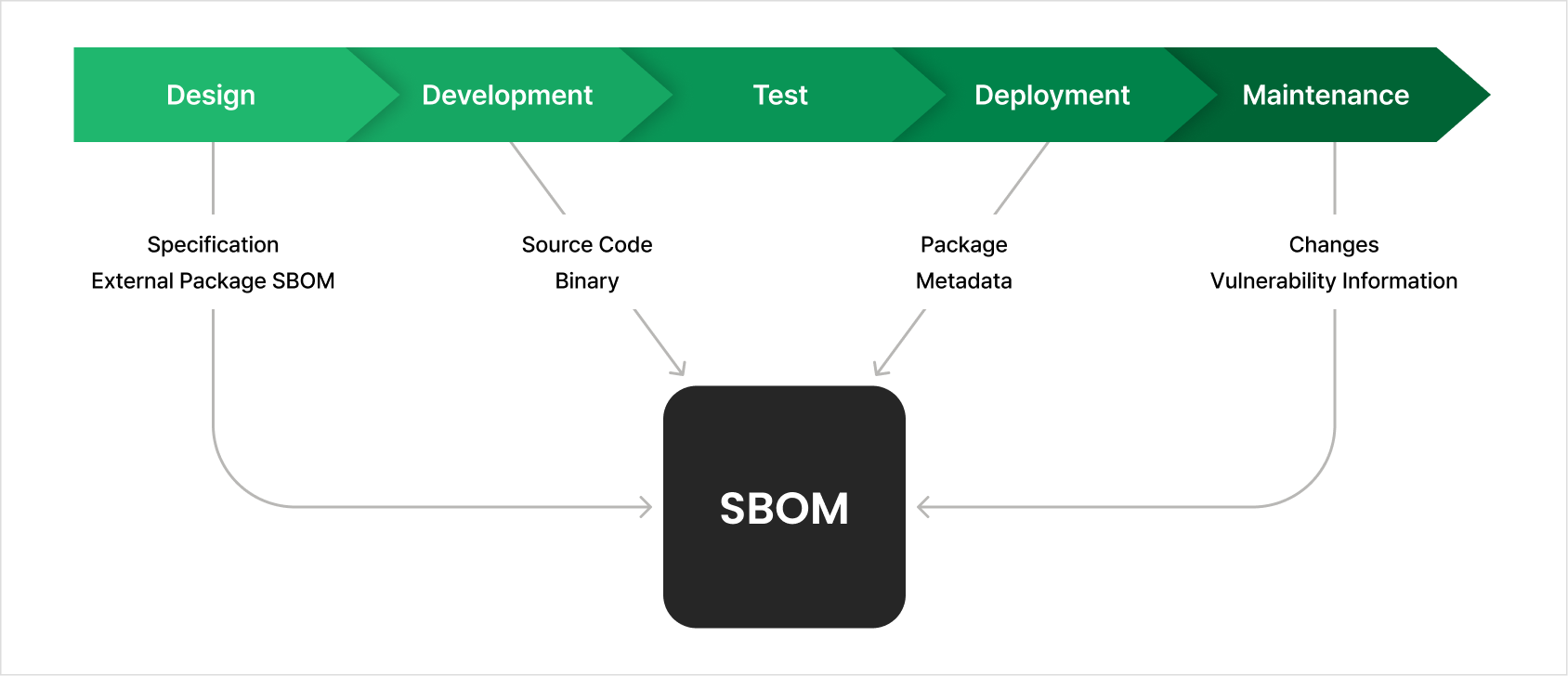
Visualizes software components and dependencies, making SBOM essential for managing software in the face of cybersecurity risks and open-source adoption.
Teamer SBOM provides efficient SBOM generation, dependency analysis, NVD vulnerability analysis, and remediation management.
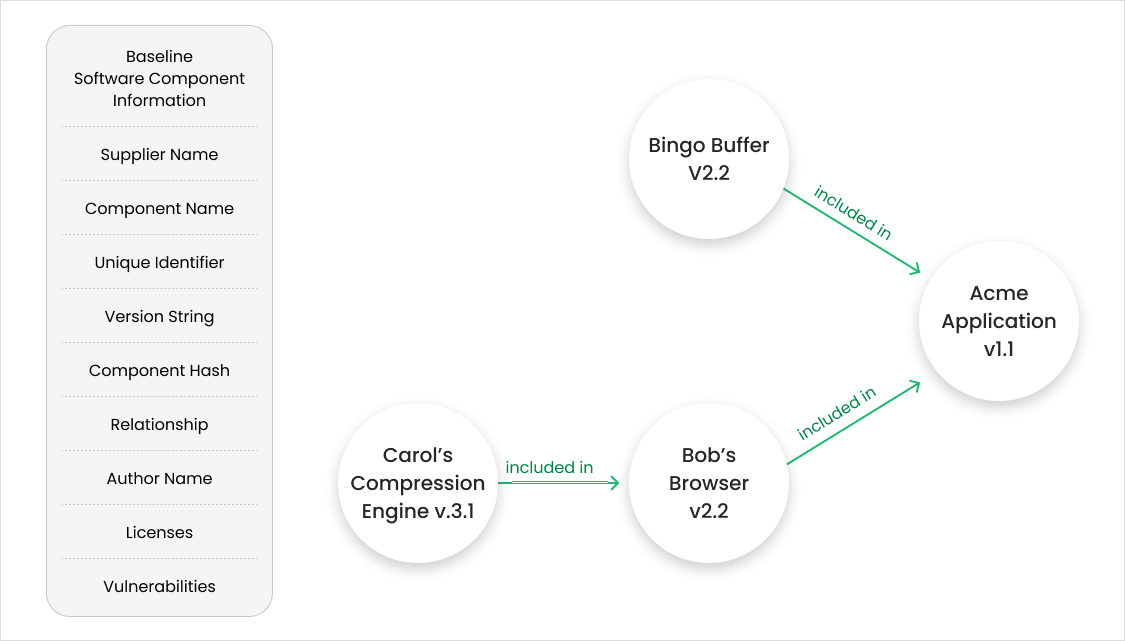
1. Generate SBOM List
Generates an SBOM list for the project.
Creates a tree view based on SBOM dependencies.

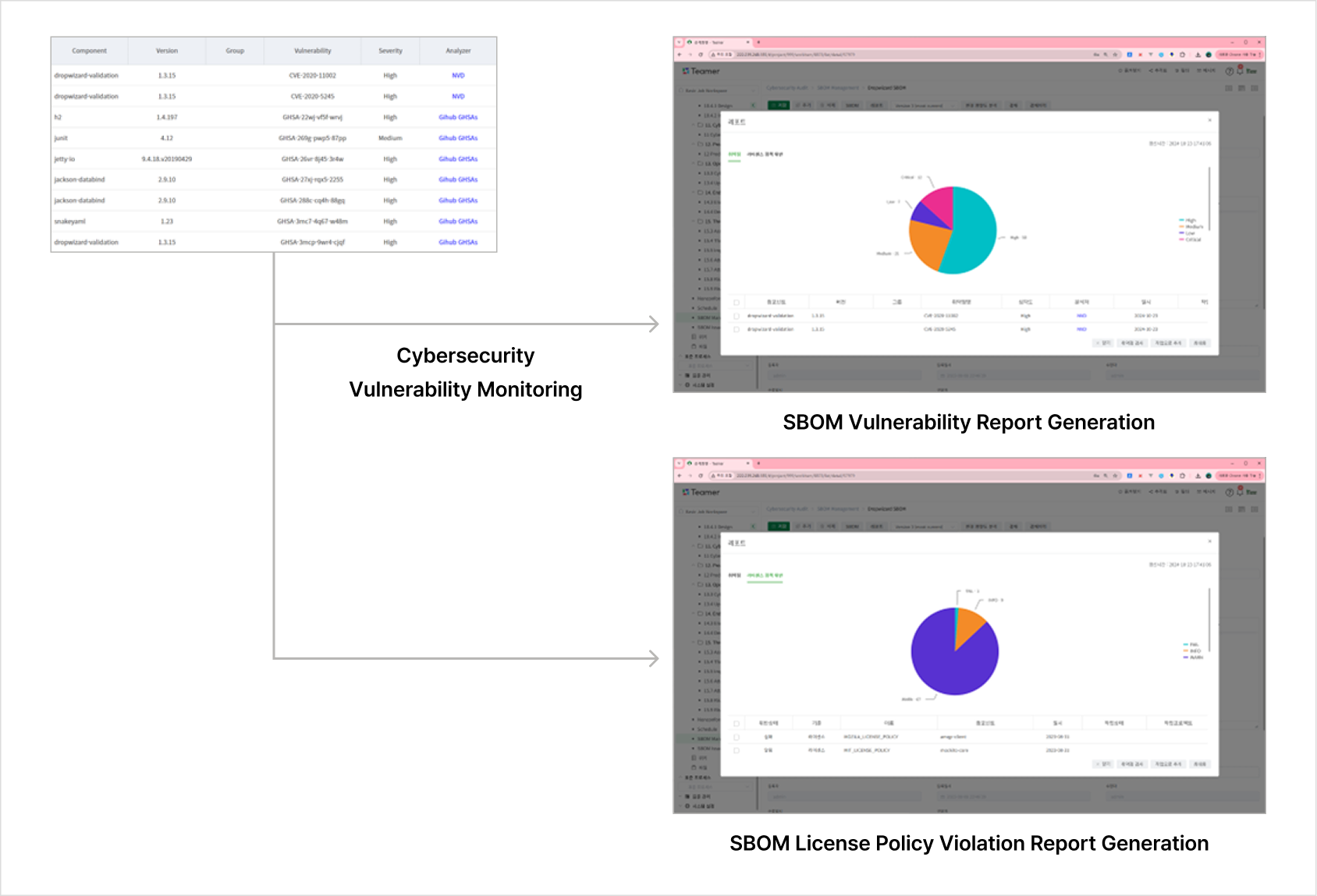
2. Monitor and Manage Cybersecurity Vulnerabilities
Identifies vulnerabilities by comparing databases such as NVD, Red Hat RHSAs, and Amazon Linux ALAS.
Provides dashboards with severity ratings: Critical, High, Medium, Low.
Creates and assigns owners for vulnerability detection and remediation.
Registers tasks and tracks remediation status.
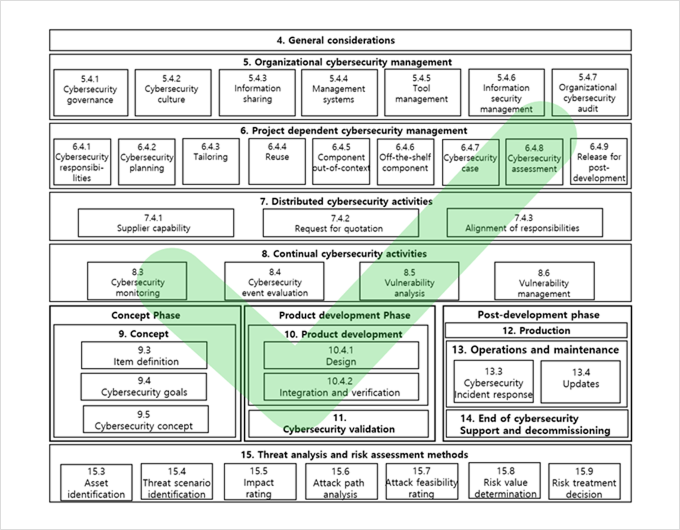
3. Lifecycle Management Support
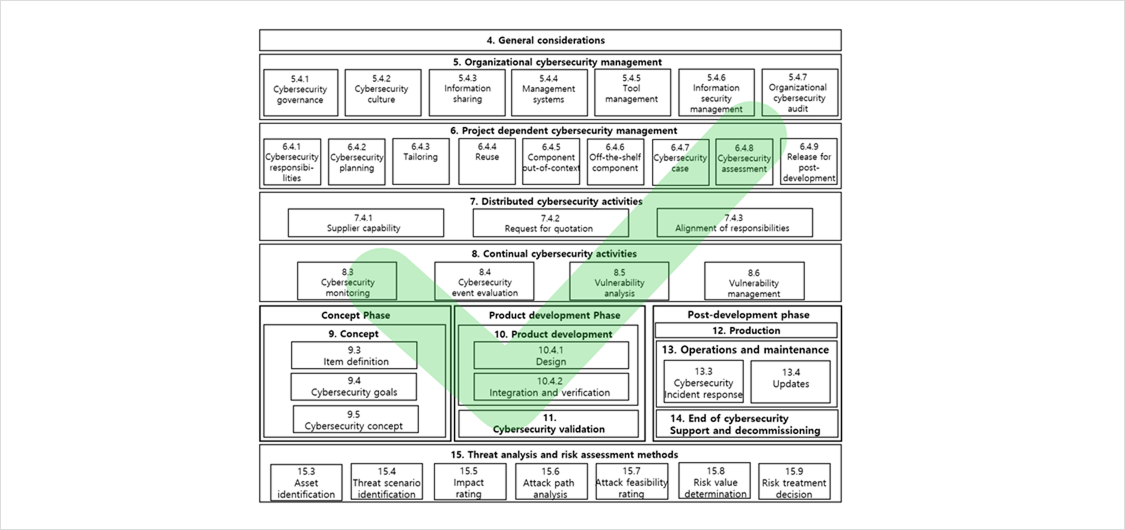
Supports cybersecurity lifecycle management aligned with CSMS processes.
Includes features for requirements and defect/issue management.





Key Functions of the CSMS Quality Management System
CSMS Dashboard
Development Methodology Management
CSMS Configuration Management
CSMS Audit Management
Tailoring Management
Traceability Management
Cybersecurity Goals and Requirements
Cybersecurity Work Product Management
Continuous Cybersecurity Monitoring
Templates Based on Organizational Standard Processes
 The ultimate goal of SBOM is to strengthen security. (Classified as an essential activity for supply-chain security management)
In the software development process, SBOM provides the basis to quickly identify software components in advance to address vulnerabilities.
In increasingly complex software supply-chain environments, SBOM contributes to significantly improving software security and transparency.
1. Strengthening expertise in supply-chain management across the R&D lifecycle
(Requirements Definition Process) Reinforces investigation and validation of open-source software to be used.
(Design/Implementation Process) Strengthens the use and verification of open-source software.
(Testing Process) Enables validation of licenses, dependencies, and vulnerabilities of software deliverables, and documentation of test results.
(Release Process) Reviews OSS information (name, version, license, site, etc.) and assesses compliance for external distribution.
2. Contribution to standardizing data formats for SBOM utilization
By using SPDX, SWID tags, and CycloneDX, contributes to the ecosystem for SBOM generation/consumption and helps institutionalize SBOM usage across the lifecycle.
3. Contribution to strengthening domestic competitiveness of SBOM automation tools
Provides systematic support for source analysis tools, repository management tools, and related infrastructure.
(Design/Implementation Process) Maximizes the use of OSS license verification tools and vulnerability scanning tools for compliance and security assurance.
(Release Process) Supports repositories (GitHub, GitLab) and CI/CD tools for storage and management of software deliverables.